

HALINA™
Predictive Passenger Flow
& Accessibility Intelligence
Case Study | Human-Centered Mobility Systems
Focus areas:
Human Factors | Public Mobility GovTech | Systems Thinking


Common characteristics include:
lack of transport at the origin point
long last-mile distances
late-night or low-frequency connections
extended waiting times in isolated locations
journeys requiring sustained cognitive and physical alertness
When mobility works in theory, but not in practice.
In many regions, especially rural and semi-rural areas, public transport routes are technically available but functionally inaccessible.
Problem
As a result, safety becomes probabilistic, not guaranteed.
If a person cannot safely and predictably participate in the system, the limitation lies in the system design — not the individual.

No public transport at the starting location
Several kilometers required to reach the first stop
Evening or night departure
Multiple transfers across long time spans
Extended waiting periods in low-activity environments
Inter-regional route between a rural area and a major city.
Example Scenario
System status: technically available
Human status: operationally unsafe
This discrepancy highlights a missing layer in current mobility systems.


Traditional planning tools model:
vehicles
timetables
distances
Existing planning models provide incomplete visibility into rural mobility conditions.
This creates infrastructure blind spots.
Design Insight
They do not model:
human risk
safety degradation over time
cognitive load & continuity of access
HALINA™ reframes mobility as a human-system interaction problem, not only a logistics problem.

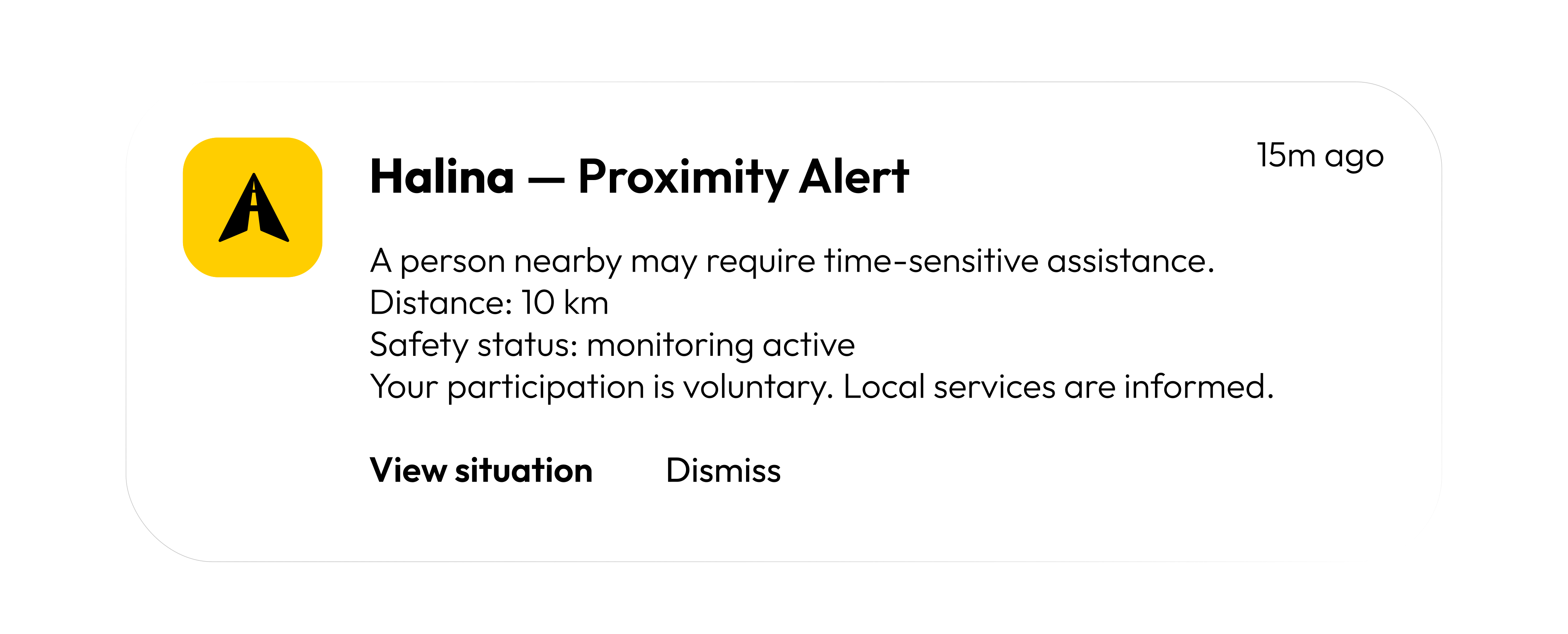
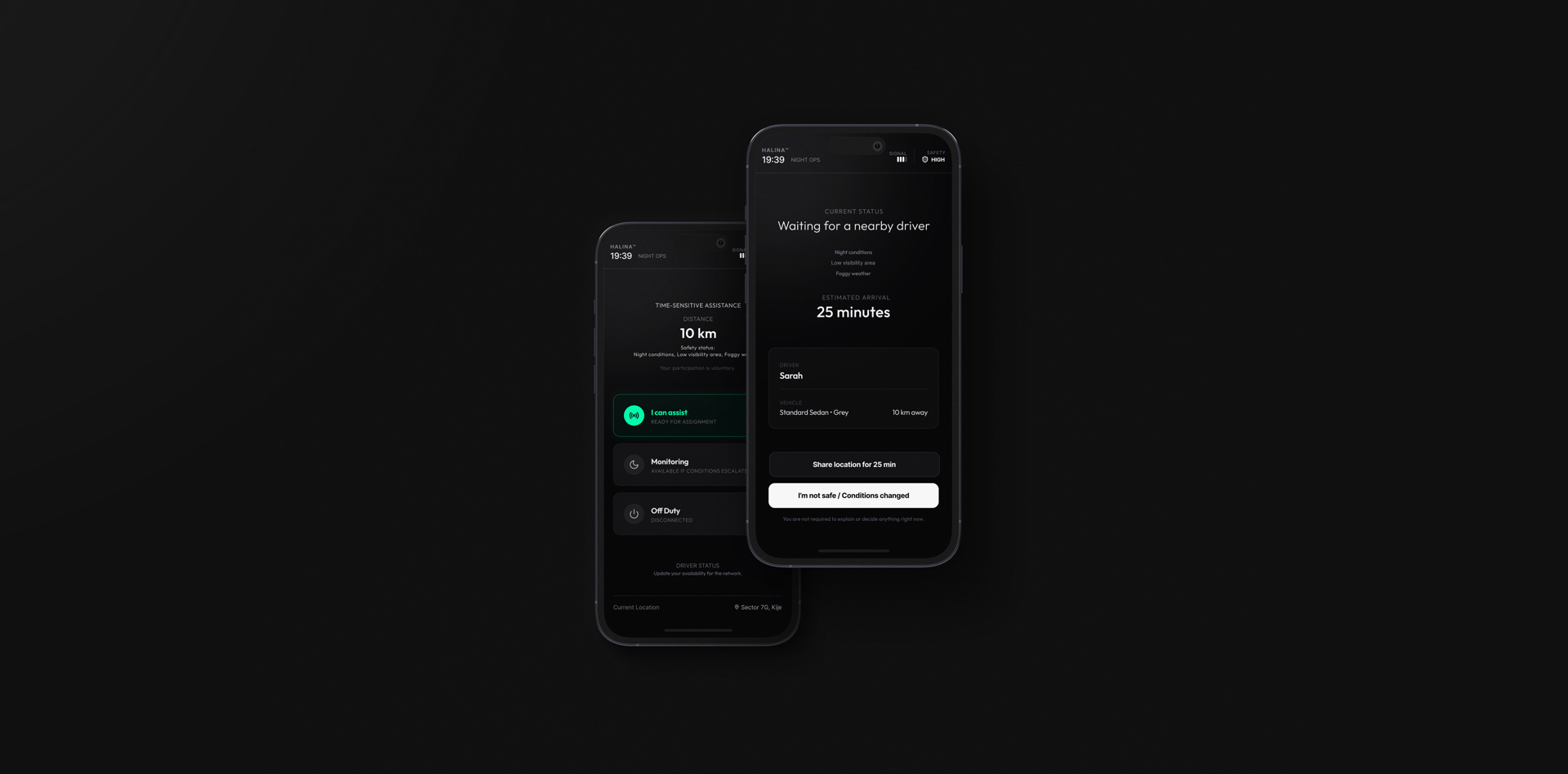
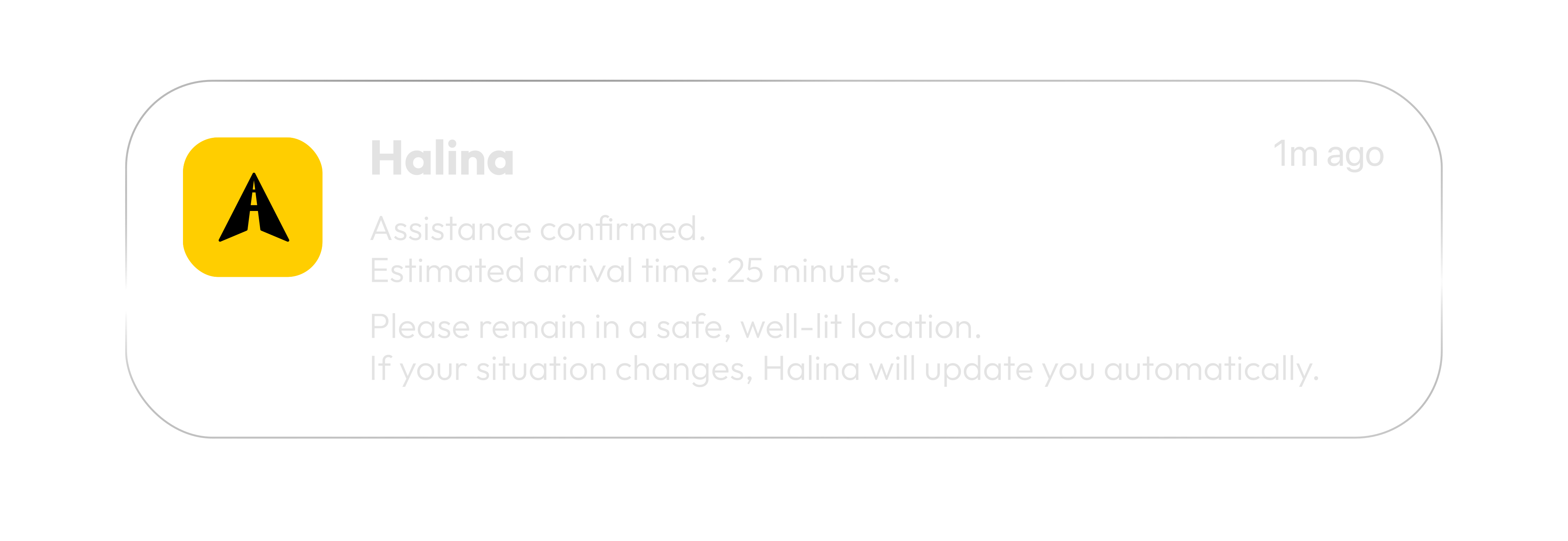
HALINA™ allows differentiated readiness without ranking participants, enabling escalation roles while preserving autonomy and preventing silent dependency.
HALINA™ dentifies mobility blind spots in rural and underserved areas.
It provides decision support for mobility planning and policy by showing where people need infrastructure.
Solution Concept
Core Functions
HALINA™ identifies where journeys become unsafe before failure occurs, including:
long night gaps between connections
extended waiting times in isolated locations
transfers with elevated human risk
routes requiring prolonged alertness
Safety Intelligence
Result: route evaluation based on human safety thresholds, not only travel time.
HALINA™ coordinates support when a person cannot safely complete a journey.
emergency status signaling
local assistance discovery
helper coordination
safe return confirmation
Assisted Return Logic
Result: no person is left without a recovery path.
HALINA™ introduces a metric that measures real opportunity, not distance.
Each route receives an accessibility score reflecting:
safety
continuity
feasibility for real users
Opportunity Access Index
This index exposes where mobility systems exclude participation, despite formal availability.
From Impact to Requirements
To move from impact to implementation, HALINA™ translates stakeholder needs into structured system requirements.
This requirement tree provides traceability between user needs, operational constraints, and measurable system behaviors.
View the full requirement tree in Figma
(Please wait for zoomable preview).
From Impact to Requirements
To move from impact to implementation, HALINA™ translates stakeholder needs into structured system requirements.
This requirement tree provides traceability between user needs, operational constraints, and measurable system behaviors.
View the full requirement tree in Figma
(Please wait for zoomable preview).
From Requirements to System Functions
Once requirements are defined, HALINA™ decomposes them into functional components and decision flows.
This architecture illustrates how inputs, constraints, and system functions interact to produce safety, continuity, and infrastructure insights.
View the full functional architecture in Figma
(Please wait for zoomable preview).
From Requirements to System Functions
Once requirements are defined, HALINA™ decomposes them into functional components and decision flows.
This architecture illustrates how inputs, constraints, and system functions interact to produce safety, continuity, and infrastructure insights.
View the full functional architecture in Figma
(Please wait for zoomable preview).
System layer

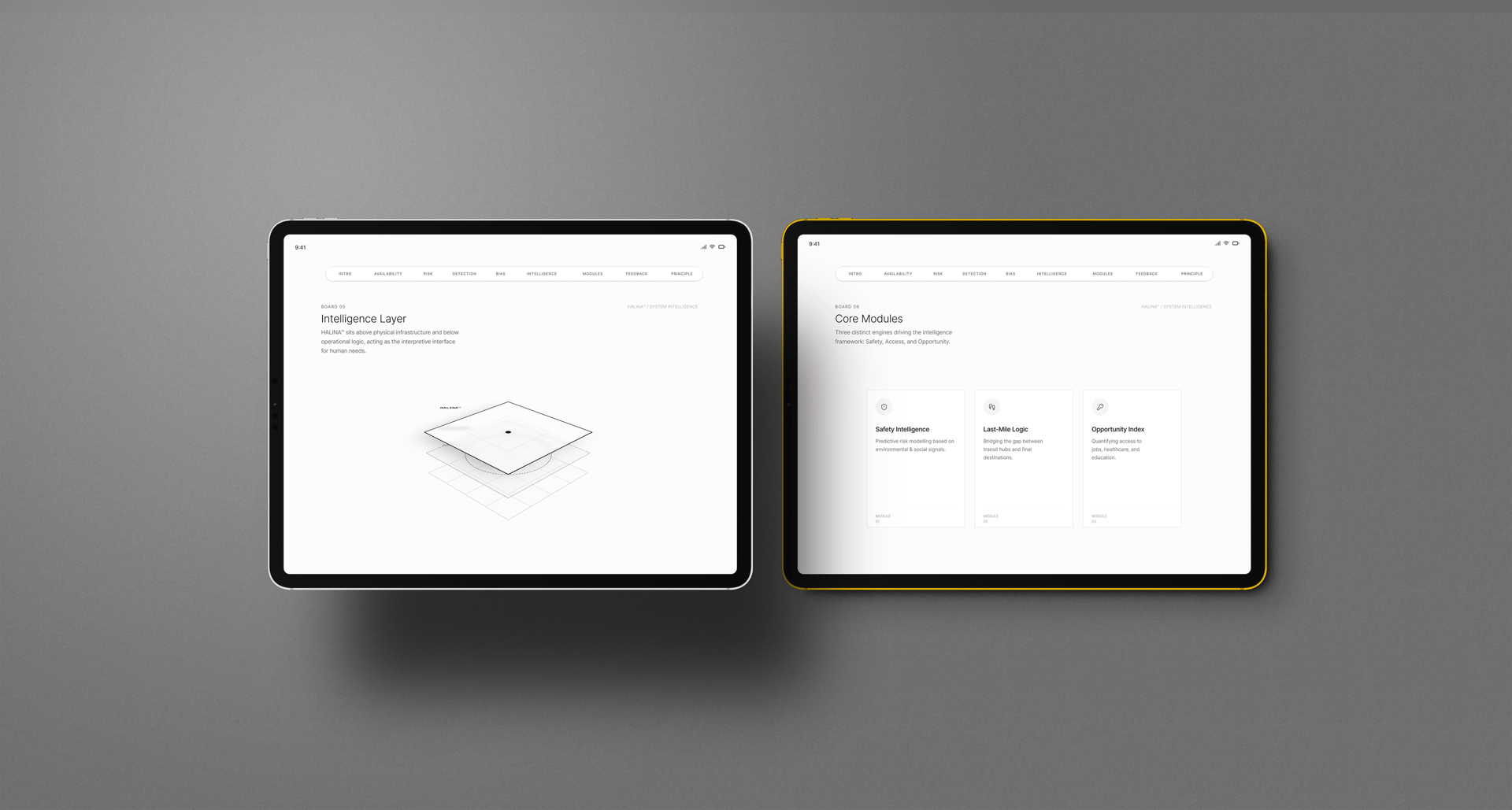
HALINA connects user-level mobile data with a desktop control view through a human–system translation layer, transforming individual journey experience into aggregated, decision-ready intelligence for planners and operators.
HALINA™ is designed for integration with:
national mobility planners
public transport authorities
large infrastructure programs
GovTech decision frameworks
System Integration Perspective
HALINA™ functions as a human-reality recorder within the mobility ecosystem.
It:
reveals blind spots in existing data
adds real-time human-factor intelligence
supports evidence-based policy refinement
provides feedback loops grounded
in lived conditions
safer mobility
better infrastructure visibility
more informed planning decisions
Impact Potential
Mobility becomes predictable, safe, and inclusive, rather than conditionally available.
HALINA™ reframes public transport as a human-centered system, where access is defined by safety and feasibility — not theoretical reach.
By introducing an intelligence layer focused on human factors, mobility systems can evolve from logistical networks into inclusive public infrastructure.
Designing systems that remain usable under real human constraints.