
Still Alive™
powered by NeuroDecode™ Emotional UX System
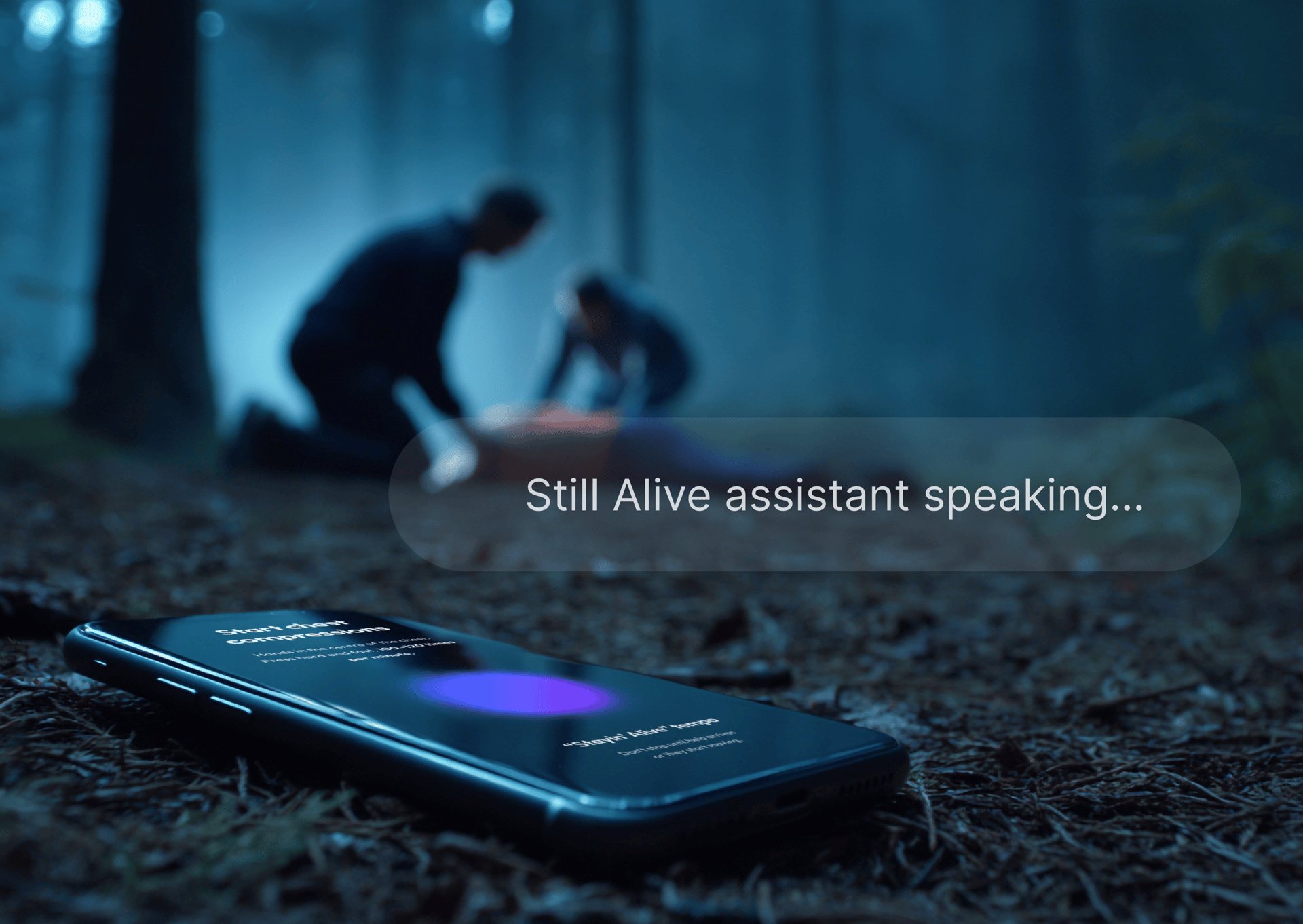
Still Alive 1.0 is an ultra-minimal, OS-style emergency layer designed to run silently in the background of a smartphone.
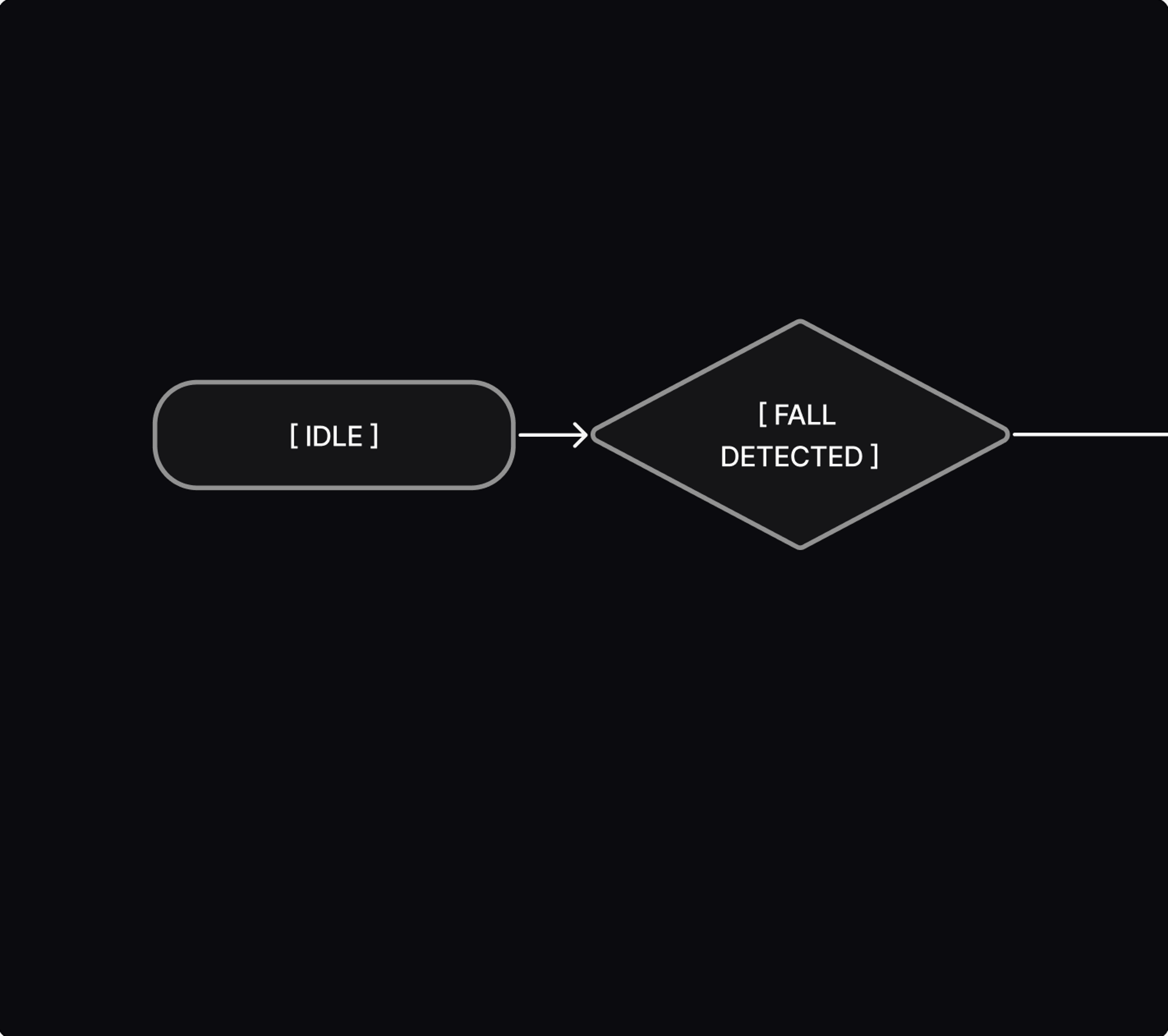
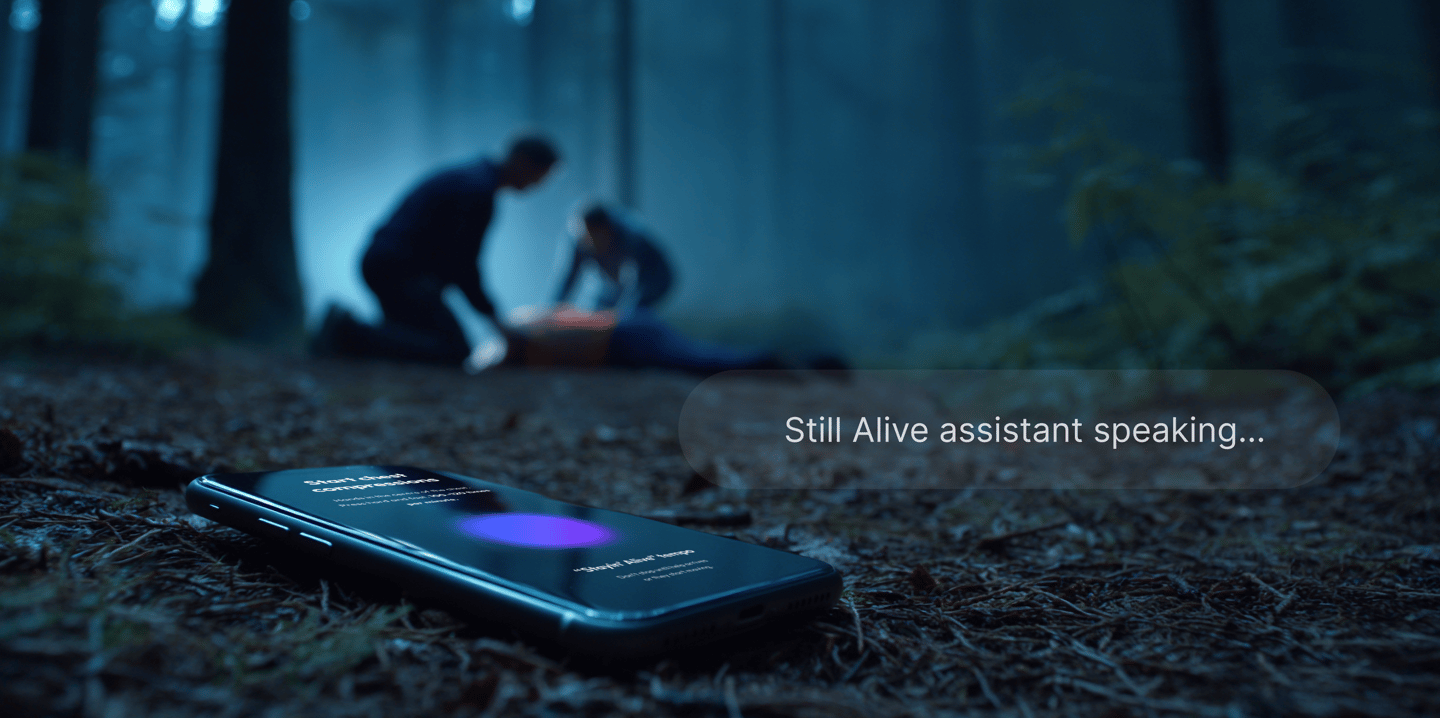
It activates only when a strong fall or impact is detected and immediately turns the device into a voice-first rescue protocol.
Its single responsibility:
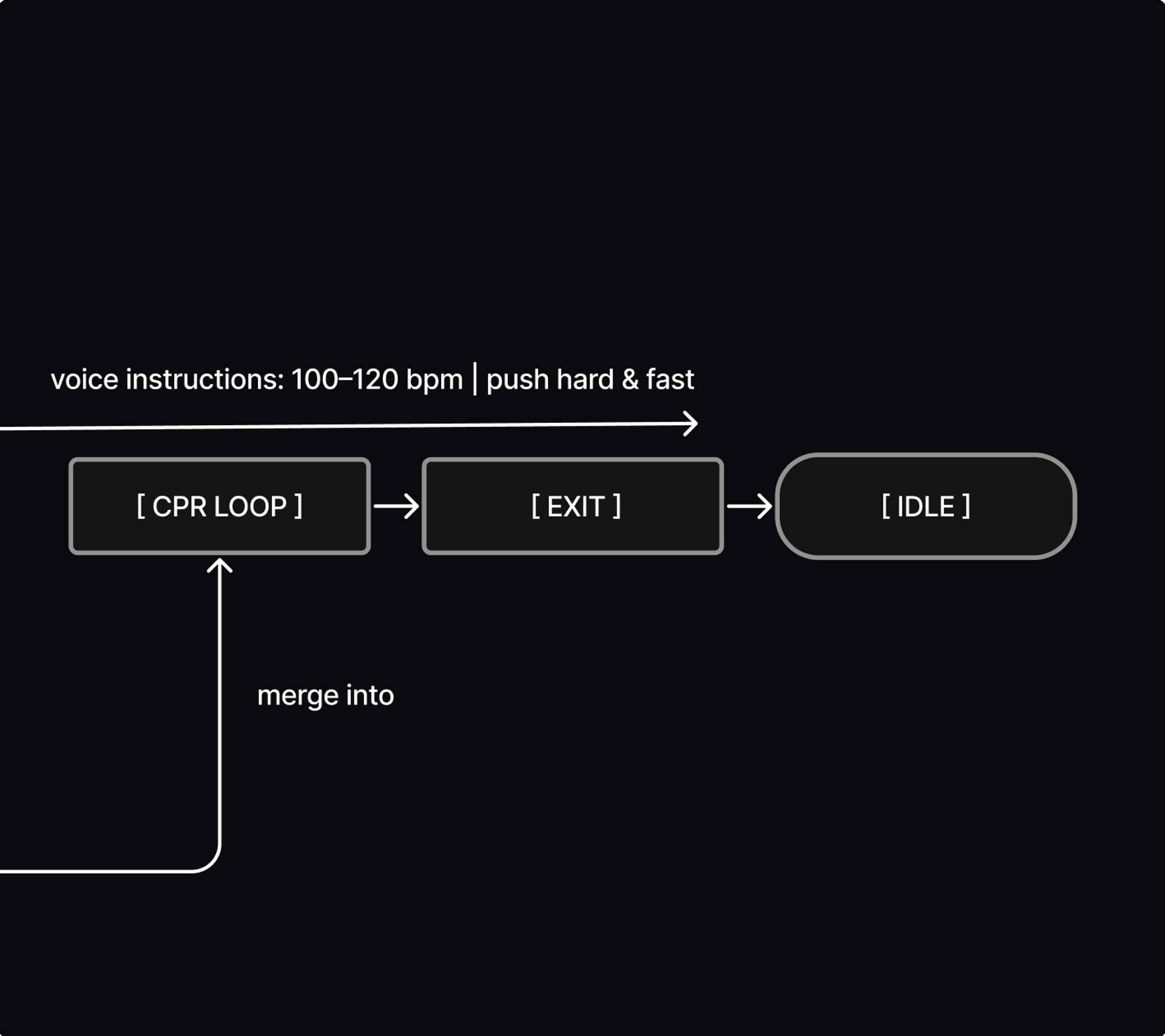
give clear, stress-proof instructions for the first critical minutes — especially CPR.
↓


Why It’s Not an App
Still Alive behaves like a system reaction, not a product.
There is:
no login
no account
no history
no dashboard
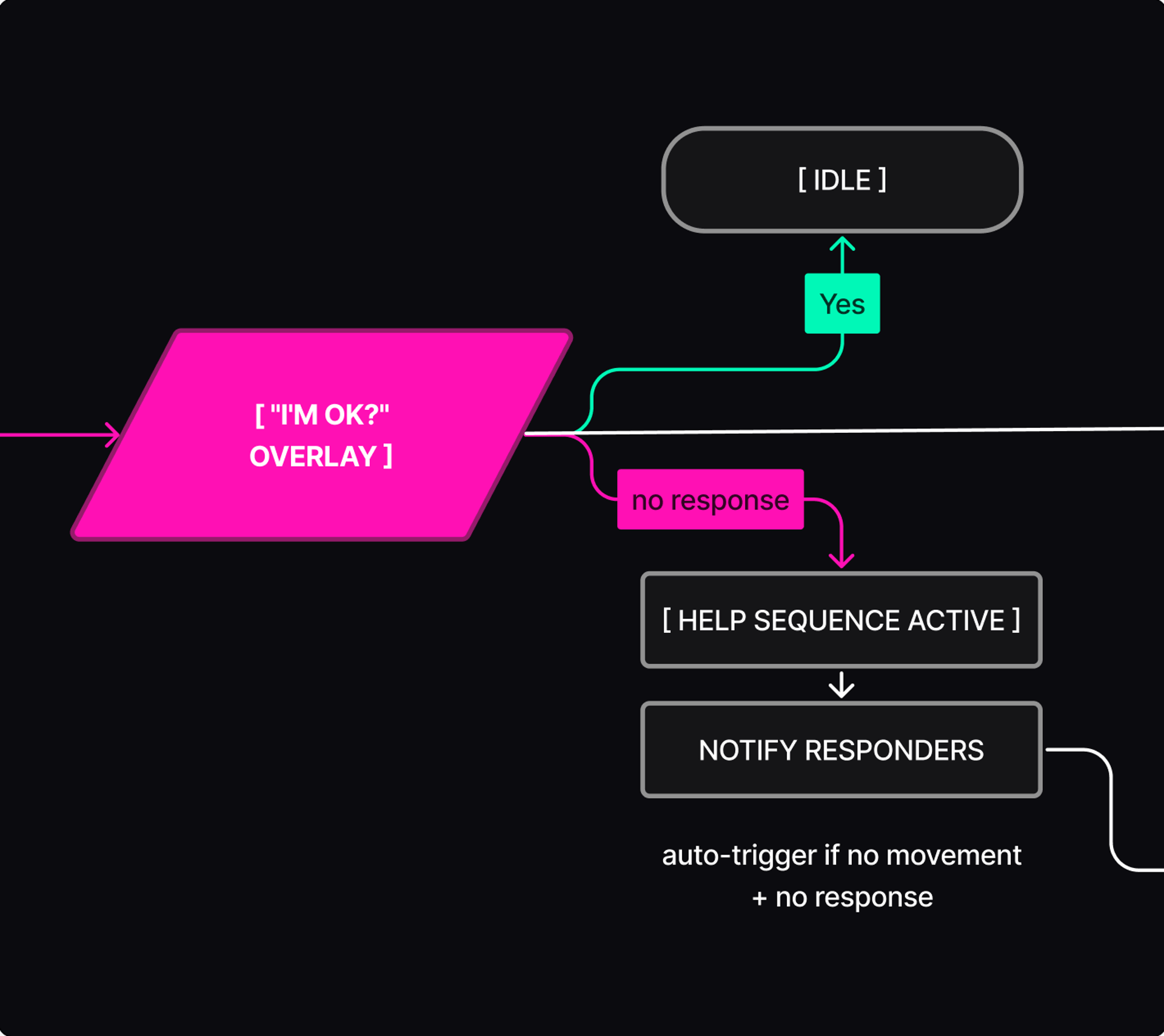
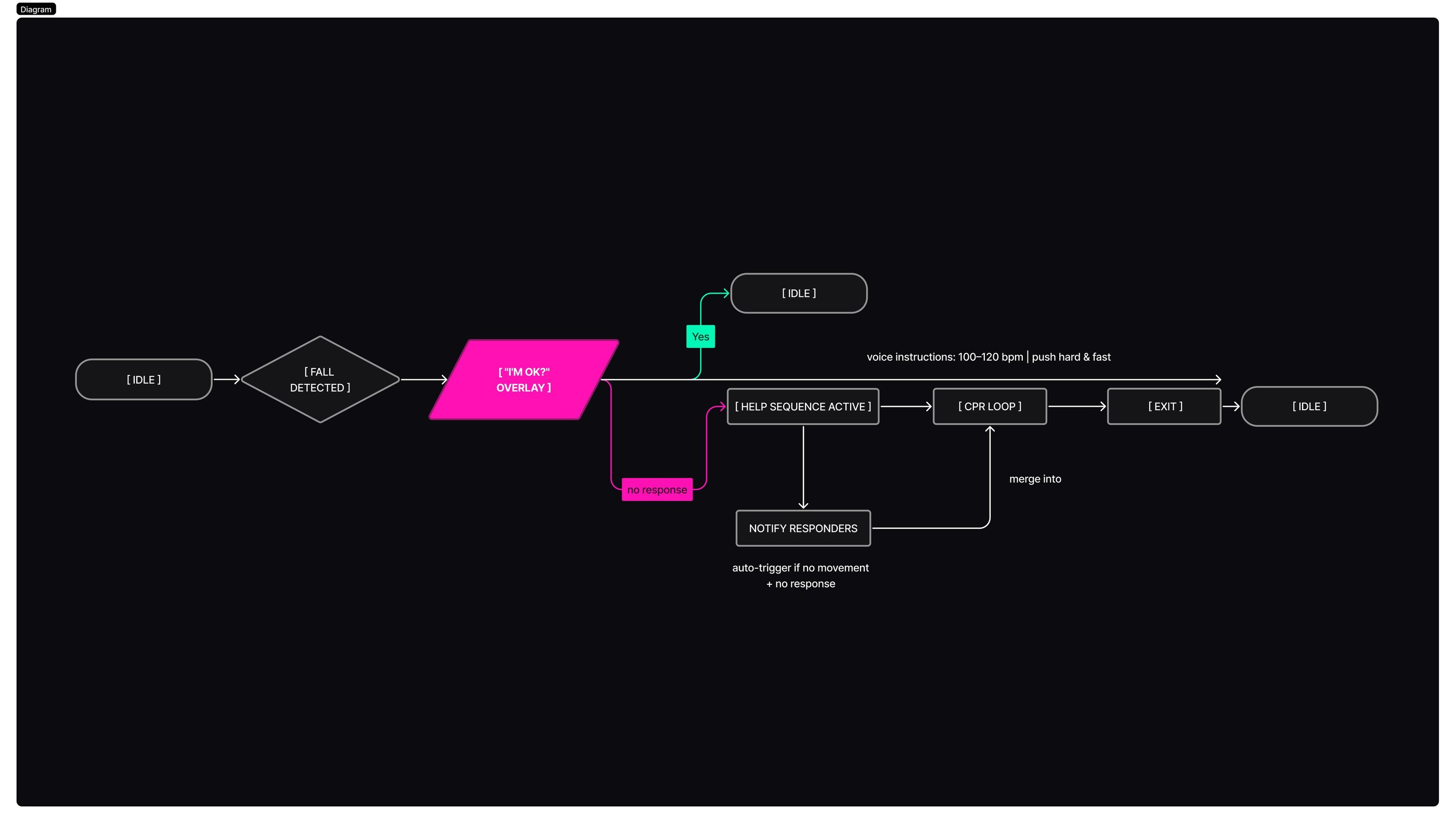
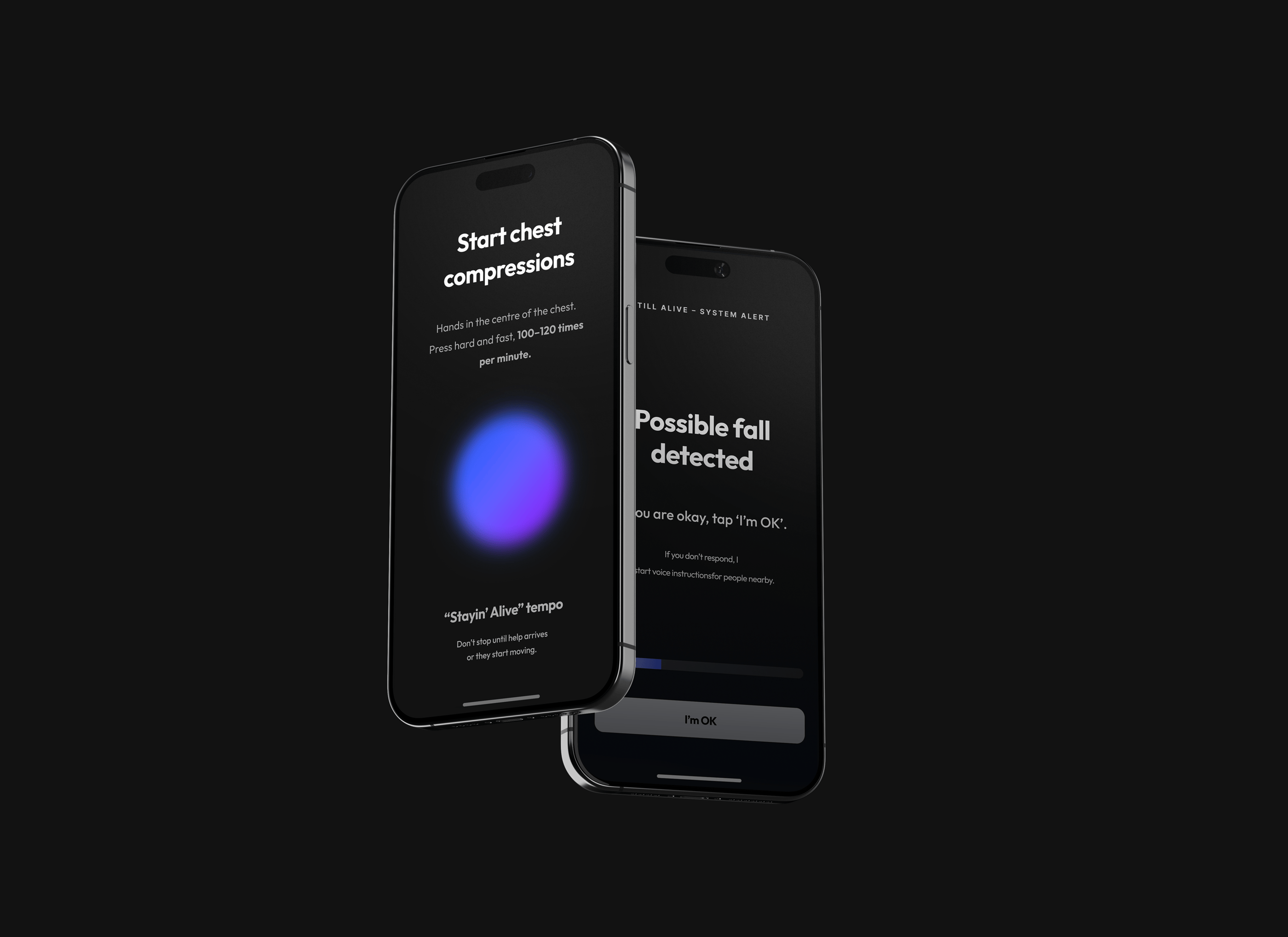
The interface appears only in one scenario: an automatic fall/impact trigger. The screen exists only to prevent false alarms and confirm escalation. All guidance is voice-first.
Cancel false alarm (“I’m OK”)
Escalation countdown (auto-call if no response)
No Feature Creep.
No Noise.
No AED maps, no statistics, no trackers, no health monitoring.
This eliminates cognitive overload and makes the system compatible with:
national ID ecosystems
emergency services platforms
OS-level safety modules
— wherever a neutral, data-light intervention is needed.
Born From NeuroDecode™
Still Alive grew directly from my work on NeuroDecode™, a cognitive system that helps users close emotional loops and reduce overwhelm.
Both projects share the same design philosophy:
remove noise
reduce panic
give the brain one clear next step
Whether it’s processing a difficult message — or dealing with a person lying on the ground.
Design Logic
A calm, dark interface.
One moving orb indicating voice activity.
Zero clutter.
Instructions following proven stress-communication standards.
Every element exists for one purpose:
support a human whose nervous system is in overload.
Potential integrations
Where Still Alive Actually Lives
Still Alive is designed as a plug-in safety layer, not a standalone product.
The protocol can be embedded into existing national or commercial systems as a neutral, data-light emergency module with unified voice instructions.
National ID / Citizen Apps
A system-level emergency overlay connected to verified identity and address.
• No extra login
• No user onboarding
• Instant trust through state authentication
Telecom SOS Services
Operator-level fall detection with a single unified voice protocol instead of dozens of incompatible “help flows.”
Improves response consistency across networks and reduces cognitive load for both callers and responders.
Smartphone OS / OEM layer
A native safety overlay triggered directly by device motion sensors.
• Works across apps
• Zero UI until needed
• Consistent experience across all devices of the manufacturer
Insurance & Health Platforms
Optional safety add-on that improves response time without storing medical history.
• Reduces risk
• Lowers emergency-resolution time
• Zero user data footprint

Designing systems that remain usable under real human constraints.